What Are UTM Parameters?
UTM parameters are the backbone of digital marketing attribution. They are tags added to URLs that help you track the source, medium, and campaign of your website traffic in Google Analytics.
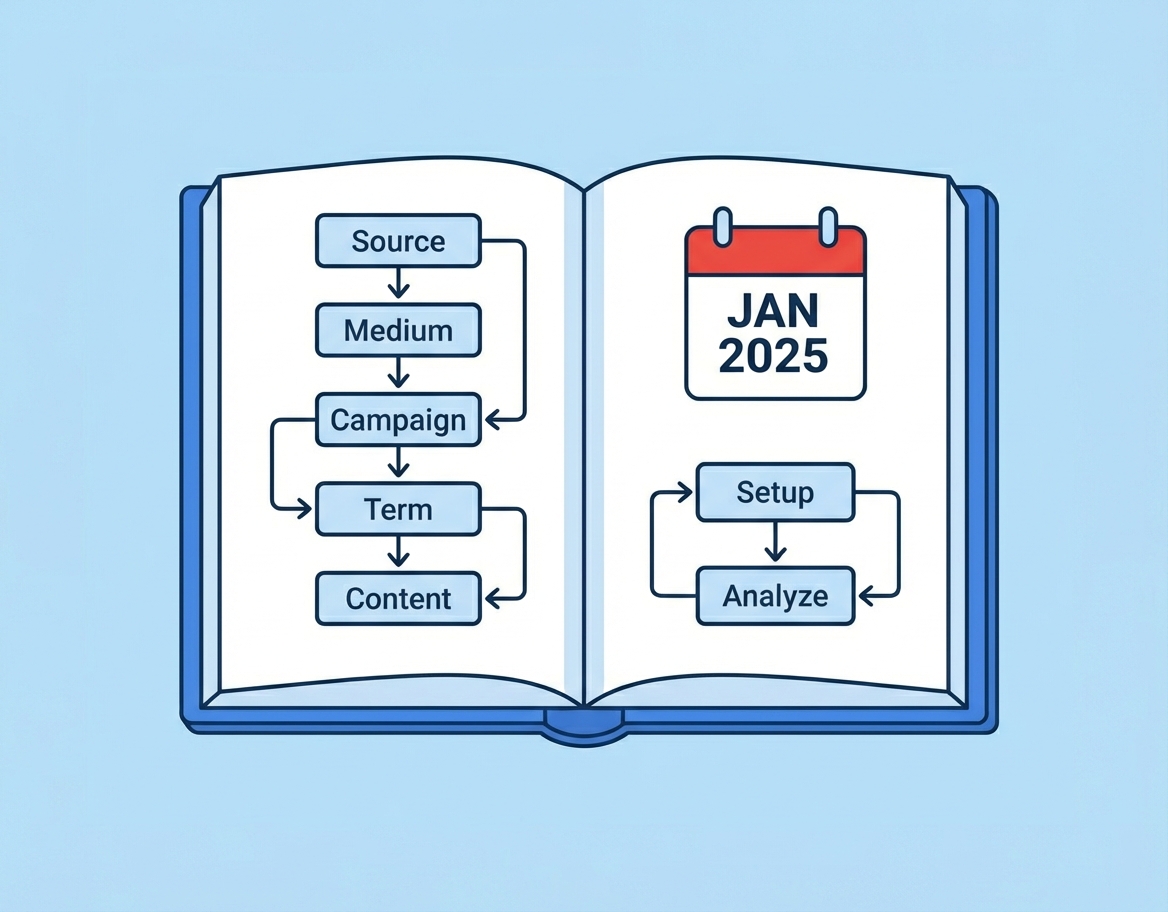
The five standard parameters are:
- utm_source: Identifies the source (e.g., google, newsletter, twitter)
- utm_medium: Identifies the marketing medium (e.g., cpc, email, social)
- utm_campaign: Identifies the campaign name (e.g., spring_sale_2025)
- utm_term: Identifies paid search keywords
- utm_content: Differentiates ads or links within the same campaign
Best Practices for UTM Naming Conventions
Consistency is the most important factor in UTM tracking. Here are the rules we recommend:
- Always use lowercase — UTM parameters are case-sensitive.
- Use underscores, not spaces — Spaces get encoded as %20 in URLs.
- Be specific but concise — Campaign names should be descriptive but not overly long.
- Document your conventions — Use a tool like UTM Mind to enforce naming standards across your team.
Common UTM Mistakes to Avoid
The most common mistake is inconsistent naming. When one team member uses "google" and another uses "Google Ads", your attribution data becomes fragmented and unreliable.
UTM Mind solves this by providing a centralized attribute library with allowed values, validation rules, and AI-powered suggestions.